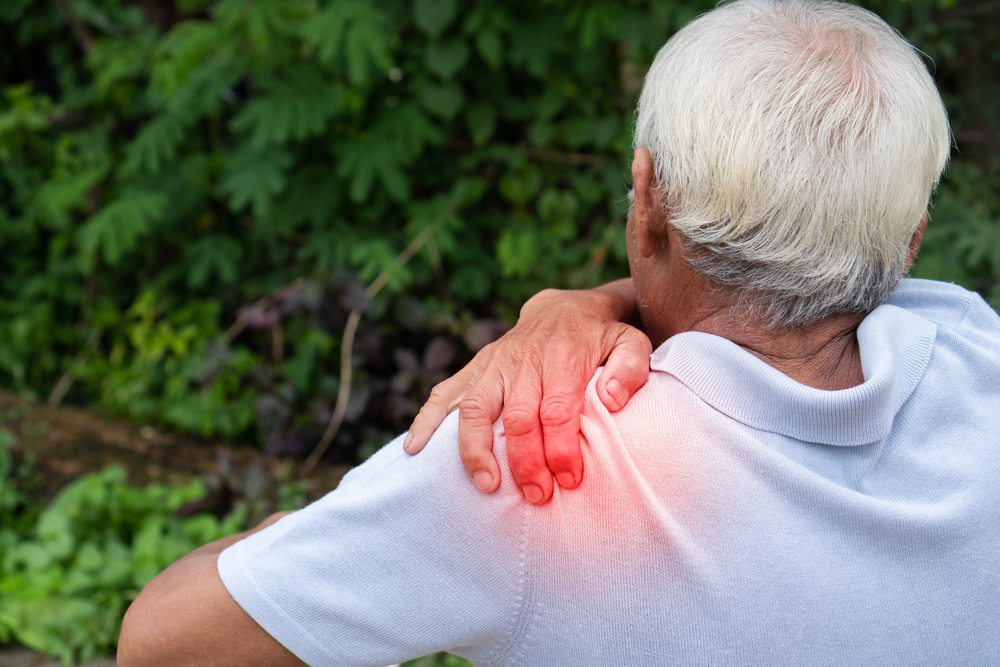
Shoulder osteoarthritis occurs when the cartilage in the shoulder joint wears away, leading to pain, stiffness, and decreased range of motion. This condition most often affects the acromioclavicular (AC) joint, but can also involve the main ball-and-socket joint (glenohumeral joint). At Cross and Crown Regenerative Care, we provide targeted, non-invasive treatments to manage shoulder OA and relieve chronic discomfort.
Whether you’re dealing with pain while lifting, reaching, or even resting, our therapies—including regenerative options and joint injections—can help reduce inflammation and restore function without the need for surgery.
Request an AppointmentWhat is shoulder osteoarthritis?
Osteoarthritis is the most common form of arthritis affecting the shoulder joint. A healthy shoulder moves smoothly because of a slippery tissue called articular cartilage.
This cartilage covers, protects, and cushions the ends of the bones that form the shoulder joint — primarily the head of the humerus (upper arm bone) and the glenoid (socket in the shoulder blade).
In a healthy joint, this cartilage allows for pain-free motion and acts as a shock absorber. With osteoarthritis, this cartilage gradually wears away.
How it happens
Osteoarthritis develops over time. As the cartilage thins, it becomes rough and frayed, making shoulder movement painful.
When cartilage is completely worn down, the bones rub directly against each other, causing friction, stiffness, and pain.
In response to cartilage loss, bones may develop osteophytes (bone spurs), which can further limit movement and cause discomfort.
Symptoms
Pain and stiffness are the most common symptoms of shoulder osteoarthritis. Pain may worsen with overhead activities, lifting, or reaching behind the back.
Many people notice discomfort after periods of inactivity, such as in the morning or after sitting still, and symptoms often progress gradually.